
In today’s digital world, streaming video has become a part of our daily lives. Whether you’re binge-watching your favorite show, renting a movie, or enjoying on-demand content, terms like OTT and VOD often come up. But do you know the difference between OTT and VOD? Understanding this can help viewers, content creators, and businesses make the right choices in the ever-growing world of online video streaming.
In this guide, we’ll break down OTT and VOD, explore popular examples, compare their key differences, and help you choose the right service for your needs.
What is OTT (Over-the-Top)?
OTT, short for Over-the-Top, is a term used for streaming content delivered over the internet, bypassing traditional cable TV or satellite TV. Essentially, OTT platforms let you watch shows, movies, and live events directly on your devices, whethera smartphone, smart TV, tablet, or computer.
Key Features of OTT:
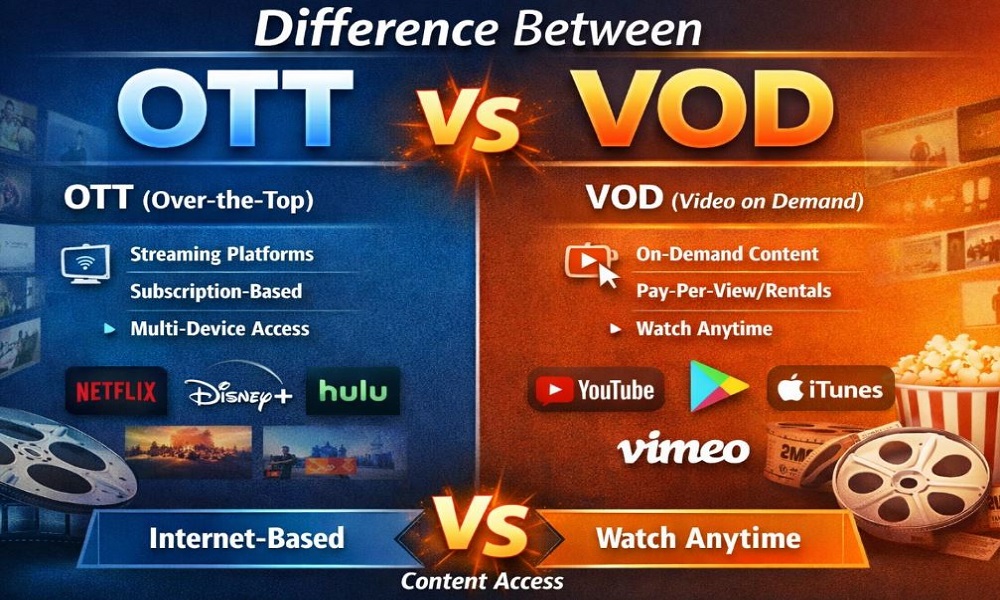
- Internet-based Delivery: Content is streamed directly online without cable subscriptions.
- Subscription Models: OTT services may use SVOD (subscription video on demand), AVOD (ad-supported), or TVOD (transactional).
- Multi-device Access: Watch anywhere, anytime, on multiple devices.
- High-quality Content: Many platforms offer HD, 4K, or even HDR content.
OTT Platform Examples:
- Netflix
- Disney+
- Amazon Prime Video
- Hulu
OTT platforms often provide a large content library and personalized recommendations. Some even include live TV channels alongside on-demand movies and series.
What is VOD (Video on Demand)?
VOD, or Video on Demand, is a system that lets users select and watch video content whenever they want. Unlike traditional TV schedules, VOD gives you the freedom to watch what you want, when you want.
Key Features of VOD:
- On-Demand Access: Choose a movie, show, or video and play it instantly.
- Flexible Pricing: VOD can be pay-per-view, rentals, or included in subscriptions.
- Niche Content Availability: Great for specific interests or independent films.
VOD Examples:
- iTunes
- Google Play Movies
- YouTube
- Vimeo On Demand
With VOD, you have full control over your viewing experience. You don’t need to wait for a scheduled broadcast.
Difference Between OTT and VOD
Although there are often mentioned together, they are not the same. Here’s a clear comparison:
| Feature | OTT (Over-the-Top) | VOD (Video on Demand) |
|---|---|---|
| Definition | Streaming content over the internet without cable | On-demand content that can be accessed anytime |
| Delivery Method | Internet-based, often includes live TV | Internet-based or through platforms like apps |
| Pricing Model | Subscription (SVOD), Ad-supported (AVOD), or Transactional (TVOD) | Pay-per-view, rental, or subscription |
| Content Access | Full library, live streaming, movies, shows | Specific movies or videos on demand |
| Device Compatibility | Multi-device: smartphones, smart TVs, tablets | Usually same devices but focused on selected content |
| Examples | Netflix, Hulu, Disney+, Amazon Prime Video | iTunes, Google Play Movies, YouTube, Vimeo On Demand |
Benefits of OTT vs VOD
Why Choose OTT?
- Watch anywhere, anytime
- Large libraries with multiple genres
- Personalized recommendations
- Access to live TV and streaming shows
Why Choose VOD?
- Watch content exactly when you want
- Pay only for what you watch
- Great for niche or independent films
- Flexible rentals or purchases
Both OTT and VOD offer convenience, but your choice depends on how you prefer to watch and your budget.
OTT Platform Examples
OTT platforms have revolutionized entertainment. Some of the most popular OTT platforms include:
- Netflix: Known for original content and binge-worthy series
- Disney+: Family-friendly content, Marvel, Pixar, Star Wars
- Amazon Prime Video: Movies, TV shows, and bundled services
- Hulu: Offers on-demand TV shows and live TV options
These platforms offer various subscription plans and VOD libraries, allowing users to stream content anywhere, anytime.
VOD Examples
VOD focuses on providing content on-demand, often for a fee. Some popular VOD services include:
- iTunes: Rent or buy movies and shows
- Google Play Movies: Purchase or rent digital films
- YouTube: Free and premium on-demand content
- Vimeo On Demand: Independent films and niche content
Interestingly, many VOD services are now integrated into OTT platforms, giving users the best of both worlds.
Read also more related topics: Sasta TV VS IPTV
IPTV VS Firestick
Which One Should You Choose?
Choosing between OTT and VOD depends on your viewing habits:
- Casual Viewers: Prefer VOD for specific movies or shows
- Binge-watchers: OTT platforms are ideal for continuous streaming
- Content Creators: OTT offers wider reach, while VOD allows monetization per view
- Budget-conscious Users: VOD pay-per-view or rentals may save money compared to OTT subscriptions
Understanding the difference between OTT and VOD helps you pick the right platform and enjoy your favorite content seamlessly.
FAQs About OTT and VOD
- What is the difference between OTT and VOD?
OTT is the platform for streaming content online, while VOD is the content you can watch on-demand. - Can VOD be part of an OTT platform?
Yes, many OTT platforms include VOD content as part of their library. - Are Netflix and Hulu VOD or OTT?
They are OTT platforms that provide VOD content. - Is YouTube considered VOD or OTT?
YouTube primarily offers VOD content but can also function as an OTT platform for live streaming. - Which is better for binge-watching?
OTT platforms are better suited for binge-watching because they offer large content libraries and continuous streaming.
Conclusion
Both OTT and VOD have changed how we consume video content. OTT refers to the platform delivering content via the internet, while VOD is the type of service that lets you watch videos whenever you want. By understanding between them, you can choose the service that best fits your viewing habits, budget, and lifestyle.
Whether you prefer subscription-based OTT platforms or pay-per-view VOD services, the world of streaming is designed for flexibility and convenience.